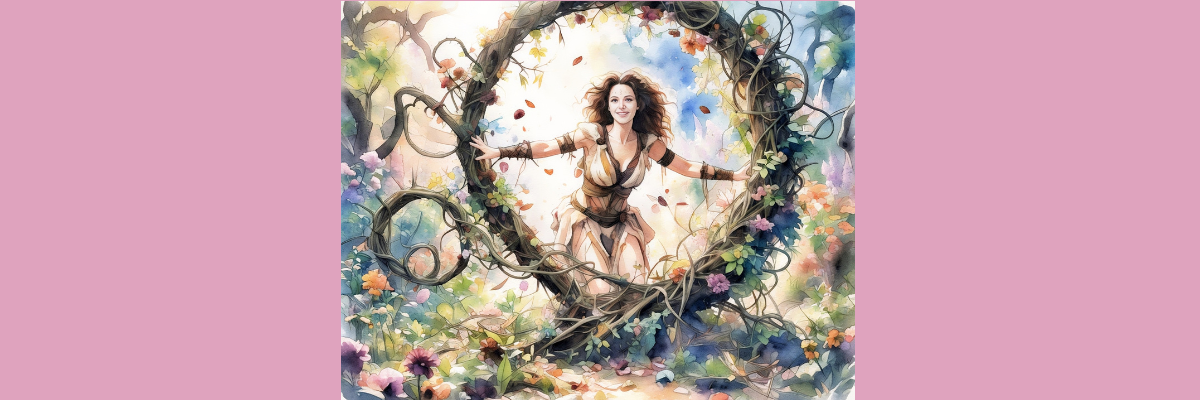
Nature's Hidden Pattern
Few of us welcome disruption. We prefer life to unfold according to plan, our bodies to remain dependable and our circumstances to stay comfortably familiar. Yet Nature tells a different story. Again and again, she demonstrates that growth and renewal are often born from periods of challenge, change and even apparent collapse.
A seed must split before it can send forth a shoot. Trees shed leaves that have served their purpose. Storms sweep through landscapes, clearing what has become stagnant and making way for fresh growth. Throughout the natural world, endings and beginnings are woven together so intimately that it is often impossible to distinguish where one becomes the other.
Human life follows the same pattern. Many of our most meaningful transformations arise from experiences we would never willingly choose. A health challenge can awaken a deeper commitment to wellbeing. A setback may reveal strengths previously hidden from view. A period of exhaustion can become the catalyst for a more balanced way of living. Looking back, we often discover that what first appeared as a breakdown was quietly preparing the ground for a breakthrough.
Stronger Through Challenge
This does not mean that hardship should be glorified, nor that suffering is somehow desirable. Rather, it suggests that life possesses an inherent intelligence that continually seeks balance, adaptation and renewal. Beneath the discomfort of change, something is often reorganising itself towards greater harmony.
Modern science observes this principle throughout the body. Muscles strengthen after exertion. Bones become denser when subjected to healthy load. The immune system learns through exposure. Living systems do not simply repair themselves; they adapt, becoming wiser, stronger and more resilient through the challenges they encounter. Nature rarely seeks mere restoration. More often, she responds to challenge by cultivating greater resilience.
The Ancient Map of Renewal
Ancient cultures recognised this same pattern long before it was described in scientific terms. The Vedic sages of India observed that all of existence moves through three fundamental phases: creation, preservation and transformation. Nothing remains fixed. Everything emerges, endures for a time and eventually changes form.
In Vedic philosophy these movements are known as the Triguṇa: Sattva, the force of clarity and emergence; Rajas, the principle of activity and maintenance; and Tamas, the power of dissolution, rest and transformation. Though described separately, they are inseparable aspects of a single living process. Without creation, nothing could begin. Without preservation, nothing could mature. Without dissolution, nothing could evolve.
These forces are reflected throughout Nature. A flower blooms, flourishes and eventually returns its energy to the soil. Seasons move from spring to summer, autumn and winter. Every living thing participates in this continual cycle of becoming.
The Repair After the Rupture
The plant kingdom offers some of the most elegant examples of this wisdom. When a branch is pruned, the plant often responds with vigorous new growth. Certain seeds remain dormant for years until fire passes through the landscape, triggering their germination. An insect's bite may stimulate a plant to produce protective compounds that strengthen its resilience.
Disturbance is not always the enemy of life. Sometimes it is the very mechanism through which life renews itself. We humans are no different. When we drift out of alignment with Nature's rhythms, through poor nourishment, chronic stress, inadequate rest, emotional burdens or simply neglecting our own needs, the body begins to communicate. At first the messages are subtle: fatigue, digestive discomfort, restless sleep, reduced vitality or a lingering sense that something is not quite right. If these signals are ignored, the body often speaks more loudly.
Yet the body's intention is not punishment. Its purpose is communication. Symptoms frequently represent an invitation to pause, reassess and restore balance. They encourage us to investigate the habits, beliefs and circumstances that may no longer support our wellbeing. From this perspective, periods of illness, challenge or disruption can become turning points. Old patterns are dismantled. New priorities emerge. Greater awareness develops. What appears to be falling apart may in fact be reorganising itself into a healthier and more sustainable form.
How Plants Guide Us Back Into Alignment
For thousands of years, herbal traditions have worked in partnership with these natural processes of renewal.
Some plants help us release what has accumulated and become burdensome. Bitters support digestion and elimination, encouraging the body to let go of what it no longer needs. Others nourish and strengthen, replenishing depleted reserves and supporting resilience through times of stress. Still others soothe the nervous system, helping restore clarity, perspective and emotional equilibrium.
A cleansing herb may assist the body's natural capacity to clear excess and create space for renewal. A restorative adaptogen may help maintain balance and vitality during periods of increased demand. A calming floral remedy may ease tension and encourage the clarity from which fresh possibilities emerge.
When viewed through the lens of the Triguṇa, we can see these plants participating in the same universal movements found throughout Nature. Some support release and transformation. Others sustain and strengthen. Others encourage new growth, creativity and vitality. Herbalism therefore becomes more than the management of symptoms. It is a way of cooperating with the innate intelligence of life itself.
Nature's Pattern of Renewal
One of the greatest sources of human suffering is our tendency to resist change. We cling to situations that have run their course, identities that no longer fit and habits that quietly diminish our vitality. Yet Nature shows us repeatedly that renewal depends upon our willingness to release what has become out-dated. The forest does not grieve the falling leaf. The river does not cling to yesterday's water. Life moves forward through continual cycles of letting go and becoming.
When we understand this, disruption begins to look different. We may still find it uncomfortable, but we can recognise that transformation is often unfolding beneath the surface. The end of one chapter creates the conditions for the next. What appears to be loss may be creating space for unexpected growth.
Perhaps this is one of the deepest lessons herbalism offers. Every root, leaf, flower and seed reminds us that health is not a fixed destination but an ongoing relationship with the rhythms of life. We are not separate from Nature's cycles. We are expressions of them. The same forces that guide the seasons, shape the forests and move the tides are also at work within us, continually encouraging greater balance, resilience and wholeness.
Shakti stirs the seed to life.
Vishnu holds the stem steady in the sun.
Shiva clears the way for the next blossoming.
Creation, preservation and dissolution,
one breath, three movements,
the eternal rhythm beating in every cell.