The Subtle Pull
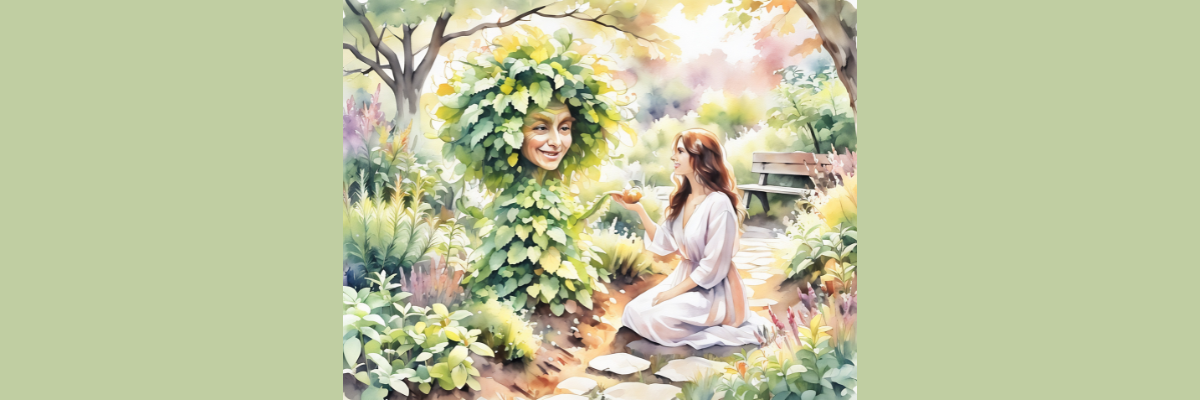
It begins almost imperceptibly. A plant catches our eye once, then again, then again as if it has slipped into our field of awareness with quiet persistence. We notice it in a neighbour’s garden, then in a book, then growing uninvited at the edge of our own path. It is not dramatic. It does not demand, it simply returns and in that return, something in us leans closer. Herbalism often begins here, not with knowledge, but with a kind of recognition that precedes understanding.
Recognition Before Reason
We are trained to seek evidence before engagement, yet with plants the sequence is often reversed. We feel first. A soft curiosity, a sense of affinity, sometimes even an inexplicable comfort. Only later do we discover that the herb we were drawn to supports precisely the system asking for attention. Bitter herbs appear when digestion is sluggish. Nervines arrive when the mind is stretched thin. It is as though the body, in its quiet intelligence, recognises in the plant a mirror of its own unmet need.
The Garden That Chooses Us
There are gardens we design and then there are gardens that design themselves. Seeds arrive on the wind, carried by birds or hidden in soil long turned. A plant appears where none was plante, and rather than dismiss it as intrusion, we might consider it an introduction. Many traditional herbal systems speak of this phenomenon not as accident, but as alignment. The land we inhabit and the body we inhabit are not separate conversations. When a plant thrives unbidden in our space, it may be participating in a dialogue we have not yet learned to hear.
The Intelligence of Affinity
Some herbs simply grow better for us. They flourish under our care as if the relationship itself is part of their vitality. Others resist, falter or remain indifferent. This is not a failure of skill. It is a clue. Affinity in herbalism is not fixed; it evolves as we do. The herb that once nourished us deeply may recede as our constitution shifts and another steps forward. This fluidity reflects a living system of correspondence between human physiology, environment and plant chemistry. Adaptogens, for instance, do not impose change; they meet us where we are. Perhaps all herbs, in their own way, do the same.
Following the Call
To follow the call of a plant is to enter into relationship rather than transaction. It asks us to observe, to taste, to prepare, to sit with its effects. This process cultivates a form of literacy that cannot be downloaded or memorised. We begin to understand the language of bitterness, the lift of aromatics, the grounding weight of roots. Over time, trust develops; not blind trust, but a grounded confidence born of experience. We learn when to reach for a herb, how much and in what form. The plant becomes less of a remedy and more of a companion in our ongoing calibration.
A Subtle Ecology of Healing
Modern research increasingly reveals what traditional systems have long intuited: plants and humans share biochemical pathways, microbial relationships and signalling mechanisms that are deeply intertwined. Polyphenols influence our gut flora. Volatile oils interact with the limbic system. Alkaloids and glycosides engage receptors with remarkable specificity. Yet beyond these measurable interactions lies a more elusive dimension. The act of tending, harvesting and preparing a plant alters our attention. It slows us into participation. Healing, in this sense is not delivered, rather it is cultivated.
Divine Strategy or Natural Intelligence
Whether we frame this phenomenon as Divine orchestration or ecological intelligence, the effect is the same: we are invited into a more responsive way of living. The plant that keeps appearing may not be a coincidence to be dismissed, but a pattern to be explored. Not every plant is “for us,” but those that persist in our awareness often have something to teach, offer or rebalance. The key is not to romanticise blindly, but to engage attentively, with curiosity and respect.
The Reward of Listening
When we begin to listen in this way, herbalism shifts from a catalogue of uses into a lived experience of connection. Our apothecary becomes personal, shaped not only by tradition and study, but also by encounter. We remember where we first found a plant, how it grew, how it tasted, what it changed. This kind of knowing carries weight. It anchors us in our own bodies and landscapes.
An Ongoing Conversation
The plant that called to us once may step back as another comes forward. This is not inconsistency; it is continuity of a different kind. A conversation that unfolds over seasons, over years, over the subtle evolution of who we are becoming. If we remain attentive, the world does not fall silent. It becomes more articulate.
And so we might ask, not what herb should I take, but rather, what is already reaching toward me. In that question, the practice of herbalism comes alive.
Coda: Lemon Balm, the Unassuming Messenger
There is one plant that has never needed to knock. Lemon balm simply arrives. It threads itself through every spare corner of the garden, softening edges, brightening the air with that unmistakable green-citrus lift. It does not ask permission and it does not apologise. I have tried to contain it and quickly learned that containment is not its language. It grows where it will, as if to say, I am already part of your life. And perhaps that is why I have come to love it so completely. Not as a specimen, but as a presence.
At first, its gifts seemed modest. A pleasant tea, a gentle ease for the nerves, a balm for unsettled digestion. Useful, yes, but almost too simple to command reverence. Yet the longer I stayed with it, the more it revealed its depth. Lemon balm is no mere soother. It speaks directly to the brain and the subtle currents of the mind, modulating mood, sharpening clarity while softening excess stimulation, restoring a kind of internal composure that feels both lucid and calm. Its chemistry is intricate, its actions far-reaching. What appeared as simplicity was, in truth, refinement.
There is something deeply rewarding in this unfolding. To follow a plant over time and discover that what you first perceived was only the outermost layer.
Lemon balm meets us lightly, but it does not remain shallow. It has a way of accompanying thought itself, steadying the loops, easing the jagged edges, inviting a more harmonious rhythm between mind and body. In a world that pulls us into fragmentation, it gathers us back into coherence.
It is no surprise then that it weaves so effortlessly through the Tinderbox materia medica. Lemon balm carries itself with a quiet assurance that does not need embellishment. It belongs wherever there is agitation to soften, where clarity is sought without harshness, where the heart and mind are asked to find common ground. It moves between preparations and formulations with grace, lending its presence without overpowering, harmonising rather than dominating.
If there were ever a plant that exemplifies the subtle call described above, it is this one. Not rare, not elusive, not dramatic. Simply present, persistent and profoundly attuned. Lemon balm did not arrive as a grand revelation. It grew at my feet, again and again, until I understood that what continues to appear in our lives is rarely accidental. Some plants call loudly. Others, like lemon balm, never stop arriving until we finally listen.